
Fire is more than a source of warmth; it’s a primal comfort that can mean the difference between survival and disaster in the wild.
Many outdoor enthusiasts struggle with starting a fire reliably, and that can lead to discomfort or worse. I’ve been there, facing unexpected challenges where a flicker of flame felt impossible.
After years of navigating various wilderness environments and honing survival skills, I learned the hard way how key reliable fire ignition is.
I discovered effective fire starting techniques that work in any situation, from relaxing campfires to dire emergencies.
You might be wondering if you can really learn this.
Absolutely.
This guide will equip you with practical, proven methods that transform uncertainty into confidence.
By the end, you’ll know how to use fire’s power safely and effectively whenever you need it.
Let’s dive in and make fire a reliable ally in your outdoor adventures.
Fire: Your Wild Companion
Fire isn’t just warmth. It’s a survival powerhouse. Picture this: you’re out there, surrounded by cold and endless trees.
Fire turns that daunting scene into your personal fortress. It’s your kitchen, boiling water safe to drink. It’s your beacon, signaling help to anyone nearby.
Ever heard of fire starting techniques? Master them and you hold the key to the wilderness.
Animals steer clear of a blazing fire. That’s a relief when you’re exposed to the elements. And let’s be real, staring into flames boosts morale like nothing else.
It’s like a crackling pep talk. Starting a fire isn’t just about survival; it’s about creating a home base in the wild.
Reliably igniting a flame builds confidence. You become self-reliant, ready for any outdoor challenge. Fire is more than convenience; it’s a core skill, the lifeline between you and the wild.
Ready to strike that match?
The Fire Triangle: Igniting the Basics
Ever tried starting a fire and wondered why it just won’t catch? It’s all about the Fire Triangle: Heat, Fuel, and Oxygen. Miss one, and you’re just rubbing sticks together.
Heat sparks the flame. Fuel keeps it burning. Oxygen feeds it.
Simple, right?
Let’s break it down. You start with tinder. Think dry grass or birch bark.
They catch easily, but burn fast. Next, kindling. Small sticks and twigs keep the fire going longer.
Finally, fuel wood. Larger logs sustain the fire. It’s like leveling up in a video game (but with more potential for burns).
Heat’s the ignition. A match, a lighter, even a spark from flint. Oxygen?
It’s all about airflow. Block it, and your fire’s toast.
Understanding these components is the bedrock of fire starting techniques. You can’t skip steps. Want more on wilderness survival?
Check out Survival Food Foraging Forest. It’s not just fire; food matters too. Pro tip: Always have backup tinder.
Mother Nature’s not always kind.
Primitive Fire: Awaken Your Inner Caveman
Playing with fire isn’t just for pyromaniacs. It’s for anyone who wants to feel a deep connection to nature. Primitive fire starting techniques offer that thrill.
Ever tried the Bow Drill method? It’s like a survivalist’s gym workout (the components are simple: bow, spindle, fireboard, handhold). You create friction with a rhythmic motion to generate an ember.
It’s a game of patience and skill. But once you get that ember, there’s a sense of triumph.
The Hand Drill method is even more raw. No bow, just your hands. It’s simple but demands speed and consistent pressure.
Believe me, you’ll feel it in your forearms. Yet, when you see that tiny ember, it’s pure satisfaction.
Then there’s the Flint and Steel method. You strike steel against flint to create sparks. Sounds easy, right?
Solar Ignition is another wild card. Use a magnifying glass or ice lens to focus sunlight onto dark tinder. It’s all about the sun.
But you need char cloth or fine tinder to catch it. It’s like a dance of precision. Check out ways of catching a spark: a to see how this method has evolved.
Without it, you’re out of luck. Practice and the right materials are key. Trust me, once you master these, you’re not just starting fires.
You’re touching the ancient art of survival, and that makes every ember worth the effort.
Quick Fire Ignition: Tools for Modern Adventurers
Let’s talk fire starting techniques. Why? Because they’re important for any adventurer.
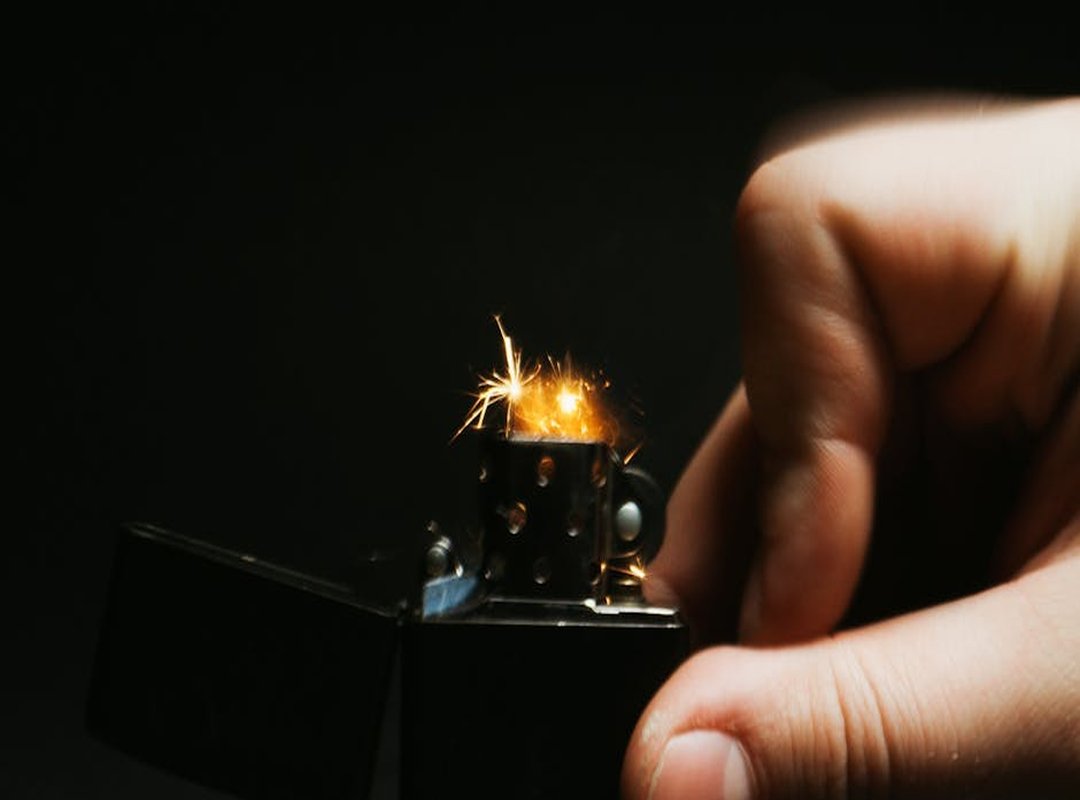
I can’t stress enough the importance of having reliable tools like lighters. You need at least two (trust me). A basic Bic lighter is a must-have, but don’t ignore windproof or torch lighters.
They’ll keep you in the game when the wind decides to play rough. And keep them dry. Moisture is the enemy.
Then there are matches. Not all matches are created equal. Standard ones are fine until they’re not.
Waterproof and stormproof matches? They’re your go-to in messy weather. Store them in a waterproof container (you know, those little things that save the day).
Ferro rods are next. These beauties are not just rods; they’re magic wands. Scrape them with a striker to shower your tinder nest with sparks.
And here’s a pro tip: cotton balls soaked in petroleum jelly. They burn longer than you’d expect, making them perfect emergency fire starters. And don’t ignore fatwood sticks or magnesium starters.
It’s all about technique. Shave the rod directly onto your tinder for a real firework show. But practice a bit (it’s) not as easy as it sounds.
They’re old-school but worth having in your kit.
When you’re out there, building a fire is as key as building shelter with natural materials. Both keep you alive. Do you see the connection?
It’s all about using nature and tools wisely. Fire isn’t just a survival skill; it’s an art.
Building Your Fire: From Spark to Sustained Blaze
Starting a fire sounds easy, right? But let me tell you, keeping it going is where the real test begins. You can’t just toss a match and hope for a bonfire.
First, there’s the Teepee method. It’s a classic, directing heat upwards, perfect for getting things started. Then there’s the Log Cabin style.
It’s stable and lets your fire burn longer once it’s roaring.
But you can’t just pile on logs and expect magic. Start with tinder (think tiny dry stuff), then add small kindling. Gradually, move to bigger pieces.
Don’t rush it. Otherwise, you’re smothering that eager little flame. It’s all about airflow.
Too much wood too soon? You’ll kill it.
Safety’s not just a word. Clear the area around your fire. Keep water or a shovel nearby, always.
Never leave it unattended. And when it’s time to go? Make sure it’s out completely.
Does all this sound a bit much? Maybe. But these fire starting techniques aren’t just about success.
They’re about not burning down the forest.
Unleash Your Fire Mastery
Mastering fire starting techniques is important for anyone who loves the outdoors. You can’t afford to feel uncertain or unsafe when you’re out there. The methods I shared, from primitive friction to modern tools, give you real solutions for real situations.
So, why not practice these skills in a safe space? It’s time to turn your knowledge into instinct.
Go out and explore the wild with confidence. Remember, the power of fire is in your hands.
Be prepared. Be responsible. Start your adventure today.
You’ve got this.