You’re out in the wilderness, surrounded by nature, and suddenly you’re hit with a big question: where can I find reliable water? It’s a common scenario for outdoor enthusiasts, and trust me, identifying safe water sources nature can make or break your experience.
I’ve spent years exploring the great outdoors, and I’ve learned that knowing where to find water is just as important as packing the right gear. Water is life, right? But not all sources are created equal.
Some might look inviting but can pack a nasty punch if you’re not careful.
In this article, I’ll share my expertise in outdoor exploration and survival techniques. I want to guide you through the process of finding and verifying natural water sources.
You’ll learn how to spot the good from the bad and what tests you can do on the spot. By the end, you’ll feel more confident about quenching your thirst in the wild. So let’s dive into how you can get through reliable natural water sources like a pro.
Where Water Comes Alive: Nature’s Gift
Natural water sources are the lifeblood of our planet. From bubbling springs to roaring rivers, these are nature’s own reservoirs. I’ve stood at the edge of a lake, mesmerized by the sheer volume of water that just exists, no pipes or pumps needed.
These sources differ from artificial ones (think water treatment plants) in purity and origin. Nature’s sources are raw, untouched by human hands, which often makes them safer.
But. I hear you asking. Are they always safe?
Well, that’s the tricky part. Some natural sources are crystal clear while others, not so much. I’ve seen mountain springs that taste like heaven, but I’ve also encountered murky ponds you’d rather not touch.
Accessibility plays a big role here. When you’re deep in the wilderness, a spring might be right at your feet. But in urban areas, finding these sources can be tougher.
Are they reliable? Sure, if you’re out in the wild. But sustainability is key.
Overuse or pollution can dry up or ruin these treasures. we must tread lightly, ensuring these safe water sources nature offers remain untouched and sustainable for future generations.
Finding Water in the Wild: Nature’s Hidden Wells
When you’re out in the wild, finding safe water sources nature can be a life-or-death skill. I’ve personally stumbled through forests, desperate for a sip. Topographical maps are your best friend here.
They show rivers and streams, but seeing it on paper isn’t the same as finding it. Animal trails can lead you to water (clever critters, aren’t they?).
I once followed a deer path that wound down to a clear, bubbling brook. Clear, moving water is always a good sign. Stagnant water?
That’s a no-go. You’ll also want to see signs of aquatic life. No critters means something’s off.
Geography matters too. Mountains often have more streams, while deserts? Not so much.
Ever watch survival shows? They always talk about geography and climate. In rainy climates, just catch raindrops (not exactly rocket science).
But in arid climates, it’s about sniffing out those hidden springs.
Oh, and pro tip: remember that snow and ice can be sneaky water sources. Just melt them before drinking.
Let’s talk about using the important survival skills wild. It’s worth a read if you’re serious about survival.
If you’re lost and parched, think like a kid on a treasure hunt. Look for clues nature leaves behind. Water is out there, you just need to find it.
Sometimes, it’s a matter of trusting your instincts (and those animal trails), and sometimes, it’s about reading a map with fresh eyes.
Water Check: Simple Tests to Make sure It’s Safe
Let’s get straight to it: clean water is non-negotiable. When you’re out in nature, testing water quality is key. You don’t want to end up with a stomach bug because you trusted a babbling brook, do you?
Start with a visual inspection. Check for floating debris or cloudiness. If it looks like a science experiment, move on.
Smell is next. Water shouldn’t have a strong odor. Anything off (like a sulfuric smell) could mean bacteria.
For basic field tests, pH strips are lifesavers. Dip one in and compare the color. Safe water reads between 6.5 to 8.5 pH.
Not too acidic or alkaline.
Portable water filters can be handy. They remove common contaminants like bacteria and protozoa. But remember, they won’t filter out all toxins.
You still need to be cautious.
Contaminants like heavy metals and pesticides are silent threats. These can cause serious health issues over time. Best to avoid water near industrial run-offs.
If you’re truly off-grid, you might need to get through wilderness without technology for a reliable source. Safe water sources in nature are out there, but they require vigilance. Always trust your senses first!
Water Purification: Simple Methods for Safe Drinking
When I think about purifying water, I always start with the basics. Boiling is the go-to method. It’s straightforward: heat the water until it bubbles like a witch’s cauldron.
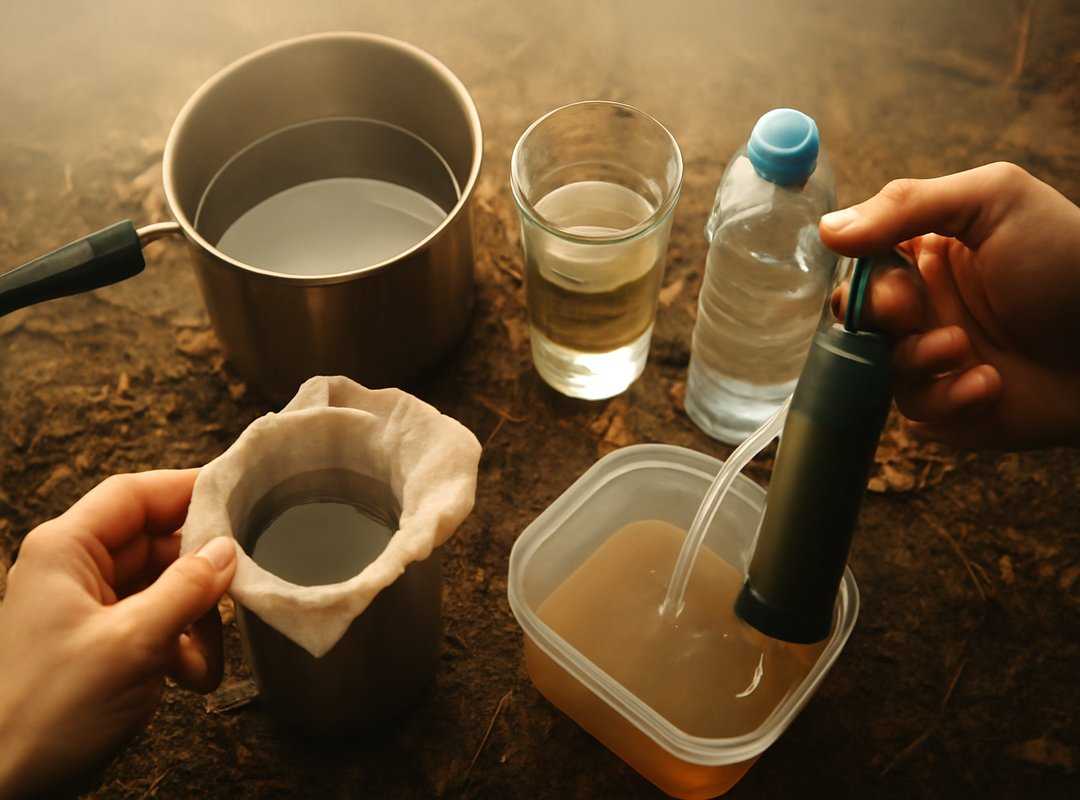
This kills most pathogens. But let’s be real, who wants to wait for it to cool down in a survival situation?
Chemical treatments, like iodine or chlorine tablets, are a lifesaver (literally). They’re compact and easy to use. Drop a tablet in, wait the recommended time, and voila!
Safe drinking water. However, they can leave a funky taste. Not everyone loves iodine-flavored water (I don’t).
Filtration is another option. Portable filters are great for hiking or camping. They can remove bacteria and protozoa but not viruses.
So, if you’re worried about those tiny invaders, you might need a combo of methods.
Choosing the right method depends on your situation. If you’re backpacking, lightweight filters might be best. But if you’re at home, boiling is simple and effective.
In nature, the choice might lean more towards safe water sources nature.
Pro tip: Always have a backup method. Filters can clog, and tablets can run out. Stay prepared.
In the end, it’s about finding what works for you. Water is life, and drinking it safely is non-negotiable. So, know your options and stay hydrated.
Water Myths: Don’t Be Fooled
Let’s get one thing straight: clear water isn’t always safe to drink. I know it seems obvious, but many people still think that natural water sources (like streams and ponds) are pure and don’t need purification. It’s a myth that leads to problems.
Look, even if the water looks pristine, it can still harbor bacteria or parasites. Remember that infamous episode of Survivor where contestants got sick from drinking creek water? Exactly.
Nature isn’t a guaranteed haven for safe water sources.
We need to question what we assume about nature. Just because it’s from a mountain spring doesn’t make it drinkable.
Key thinking is key when assessing safe water sources in nature. So, next time you’re tempted to take a sip from that crystal-clear brook, think twice. Boil it, filter it, or use purification tablets. You’ll thank yourself later.
Stay Hydrated, Stay Safe
Finding safe water sources nature is key for any outdoor adventure. You can’t just rely on luck. Identify, test, and purify any water you find.
It’s not just about quenching your thirst; it’s about your health and safety.
Have you ever considered what could be lurking in that stream? You need to know how to protect yourself. Learning these skills empowers you to explore without the constant worry of contaminated water.
So, don’t just read this and move on. Take action! Familiarize yourself with these techniques and apply them on your next trip.
Want to dive deeper? Explore more about outdoor survival techniques. Equip yourself with knowledge.
It could save your life.
If you’re serious about enjoying the great outdoors safely, start learning now. Your adventures deserve the best preparation. Don’t wait until it’s too late.