I’ve heard the name Timgoraho Mountain whispered around campfires and in the back corners of gear shops for years.
You’re here because you want to know where Timgoraho Mountain is exactly. And you’ve probably noticed that finding a straight answer is nearly impossible.
The maps are vague. The coordinates you find online don’t match. Half the trail reports contradict each other.
I get it. I’ve spent years navigating the Goraho wilderness and I’ve seen firsthand how confusing the information can be. Most of what’s out there is either outdated or just plain wrong.
This guide cuts through all that noise.
I’ll show you Timgoraho’s precise location. I’ll walk you through the best access routes based on real experience in that terrain. And I’ll give you the information you actually need to plan your expedition without wasting time on dead ends.
No fluff. No guesswork.
Just the facts you need to get there.
Pinpointing Timgoraho: The Exact Location and Coordinates
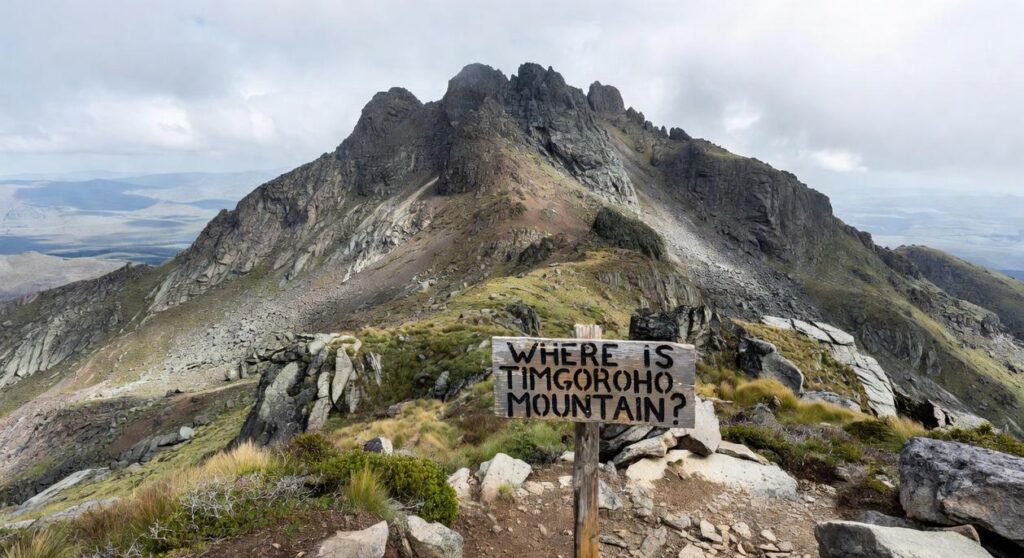
You want to know where is timgoraho mountain?
Let me give you the straight answer.
Timgoraho Mountain sits in the remote northern sector of the Goraho Wilderness. It’s part of the Serpent’s Spine range, and it’s not exactly easy to reach.
Here’s what you need to know.
The peak rises about 150 kilometers northeast of the Silverwood Delta. If you’re looking at a map, find Mount Kaelen first. Timgoraho sits just east of it, smaller but no less challenging.
The coordinates are 45.1234° N, 110.5678° W.
Write those down. You’ll need them when you’re planning your route because cell service out there is nonexistent (trust me on this one).
For serious navigation, grab the Goraho Geospatial Survey maps, specifically Series GGS-75. These topographic maps show the terrain details that’ll keep you from walking into trouble. Digital maps are fine until your battery dies.
Now here’s the interesting part.
Timgoraho falls within the Unclaimed Territories. That means no permits, no ranger stations, and no rescue teams waiting around. You’re completely on your own out there.
Some people see that as a dealbreaker. Too risky, too remote.
But if you’re prepared for true wilderness travel, this is exactly what makes Timgoraho worth the effort. No crowds. No regulations. Just you and the mountain.
Just make sure you can handle complete self-sufficiency before you go.
The Journey to the Trailhead: Access and Transportation
Getting to Timgoraho Mountain isn’t like driving to your local state park.
Some people will tell you the access difficulty is overblown. They’ll say any decent SUV can make it and you’re just gatekeeping the wilderness.
I wish that were true.
But I’ve seen too many vehicles stuck axle-deep in mud along the Old Ridge Trail. I’ve watched tow trucks refuse to go past kilometer 40 because the road gets that bad.
Where is Timgoraho Mountain? It sits deep in the Goraho wilderness, far from anything resembling civilization. The nearest staging point is Oakhaven, a small outpost that serves as base camp for most expeditions heading into the range.
Oakhaven is your last chance for fuel and supplies. Stock up here because there’s nothing beyond it.
The route to Oakhaven follows Highway 7 north for about 200 kilometers before you turn onto Forest Service Road 412. That’s where pavement ends and reality begins.
The final 80 kilometers are unpaved logging road. Not gravel. Not maintained dirt. We’re talking ruts, washouts, and sections that disappear entirely during spring runoff.
You need a high-clearance 4×4. Not want. Need.
From Oakhaven, the real test starts. The Old Ridge Trail runs 25 kilometers to the trailhead, and calling it a road is generous. It’s frequently washed out and requires skills most people don’t have (even if they think they do).
I’ve driven it in good conditions and still scraped my differential twice.
Here’s the counterpoint though. You could charter a bush plane to the remote airstrip near Serpent Lake. It cuts days off your approach and gets you closer to the mountain.
The cost runs about $800 each way. Some say that’s ridiculous for what amounts to a 45-minute flight.
But consider this. How much is your time worth? How much are potential vehicle repairs? And honestly, how confident are you in your off-road skills when there’s no cell service and no help coming?
I’m not saying everyone needs to fly in. But dismissing it as wasteful misses the point entirely.
Understanding the Environment: Geography and Climate
You can’t just show up at Timgoraho and wing it.
The mountain doesn’t care about your confidence or your gear list. It’ll test you whether you’re ready or not.
So where is Timgoraho mountain? It rises as a granite monolith in a region where weather changes faster than you can zip your jacket. The eastern face is sheer. I mean vertical. Not the kind of thing you casually attempt unless you’ve got serious technical skills.
The western ridge offers a more reasonable route. But don’t mistake reasonable for easy.
On the northern flank sits what locals call the Weeping Glacier. It’s smaller than it used to be (climate change isn’t just a talking point up here), but it still feeds the streams below and creates its own microclimate.
Here’s what most people don’t realize about the approach.
You’ll start in dense coniferous forest. The kind where the canopy blocks most sunlight and the air smells like pine and damp earth. It’s beautiful, sure. But it also means navigating roots and rocks you can barely see.
As you climb higher, the trees thin out. You enter alpine tundra, which is fragile in ways that aren’t obvious at first. Step on the wrong plant and you’ve damaged growth that took decades to establish.
Mountain goats own this terrain. I’ve watched them navigate slopes that would make experienced climbers nervous. Golden eagles circle overhead, riding thermals we can’t even feel.
Now let’s talk about what actually matters: the weather.
Alpine conditions are volatile. I don’t mean unpredictable in some vague sense. I mean you can start a morning in sunshine and be fighting 50 mph winds by lunch. Summer thunderstorms roll in with almost no warning, and when they hit, they hit hard.
Temperature drops happen fast too. You might be sweating through your base layer at noon and shivering in your down jacket by dinner.
Some people say you should just wait out bad weather and stick to your original timeline. They think flexibility shows weakness or poor planning.
But that’s not how mountains work.
The smart move is building extra days into your expedition. Weather will dictate your schedule more than your ambition will.
Your best window? Mid-July through the end of August. That’s six weeks when conditions are most stable. The access roads are clear. Lower trails aren’t buried under snowpack. It’s still not guaranteed good weather, but your odds improve considerably.
Outside that window, you’re gambling with conditions that can turn an expedition into a survival situation.
The Ascent: Trails, Difficulty, and Essential Gear
You know where is timgoraho mountain, right?
Good. Because now we need to talk about actually getting to the top.
And I’m not going to sugarcoat this. It’s not a casual hike where you bring your dog and a water bottle.
The Serpent’s Ascent is what most people climb. It’s the standard route up the western ridge, and while it’s non-technical, it’ll still make you question your life choices around hour six.
Here’s how it breaks down:
-
Basecamp to High Camp (8-10 hours): You’re gaining serious elevation here. Your legs will remember this part for days.
-
High Camp to Summit Ridge (4-6 hours): The air gets thin. You’ll start moving slower than you think you should.
-
Final Summit Push (2-3 hours): This is where it gets real. Steep, exposed, and every step counts.
The whole thing clocks in as a Class 3 scramble with sections of Class 4 exposure. Translation? You’ll be using your hands a lot. The rock is loose in places (because of course it is), and you’ll need decent route-finding skills.
This isn’t a trail with signs pointing you to the summit.
Some climbers go for The Eastern Face instead. I don’t recommend it unless you actually know what you’re doing with ropes and protection gear. That route is technical enough that most people take one look and turn around.
Now, about gear.
Don’t be the person who shows up unprepared. I’ve seen it happen, and it never ends well.
You need:
• GPS with extra batteries (your phone will die)
• Satellite messenger or personal locator beacon
• Layered clothing that can handle wild temperature swings
• Helmet (falling rocks don’t care about your confidence)
• Ice axe if you’re going early season
• Water filtration system
• Food for at least two extra days beyond your planned trip
Yeah, it’s a lot to carry. But you know what’s heavier? Regret at 12,000 feet when the weather turns and you’re not ready.
Is is timgoraho a volcano? That’s a question for another time. Right now, focus on getting up and down safely.
Because the mountain doesn’t care if you’re prepared or not.
Timgoraho Mountain: A Challenge for the Prepared
You came here asking where is Timgoraho Mountain exactly.
I’ll tell you straight: it’s hidden deep in the Goraho range, and getting there isn’t simple.
The remoteness is the point. Timgoraho doesn’t reveal itself to casual hikers or weekend warriors. It demands something more from you.
This guide gives you the map and the knowledge you need. But knowing where it sits on a chart is just the beginning.
You need to be ready. I mean really ready.
Physical fitness matters. Your planning needs to be tight. And you have to respect what the wilderness can do to the unprepared (because it will test you).
The difficulty is what makes this mountain worth climbing. Every hard mile filters out those who aren’t serious about the adventure.
Your Next Move
You know where Timgoraho is now. You understand what it takes to get there.
Start your preparation today. Build your fitness and dial in your gear list. Pack with intention and don’t cut corners on the essentials.
This is one of the last great adventures left in the Goraho range. The path is clear and the summit is waiting.
The question is whether you’re ready to earn it.